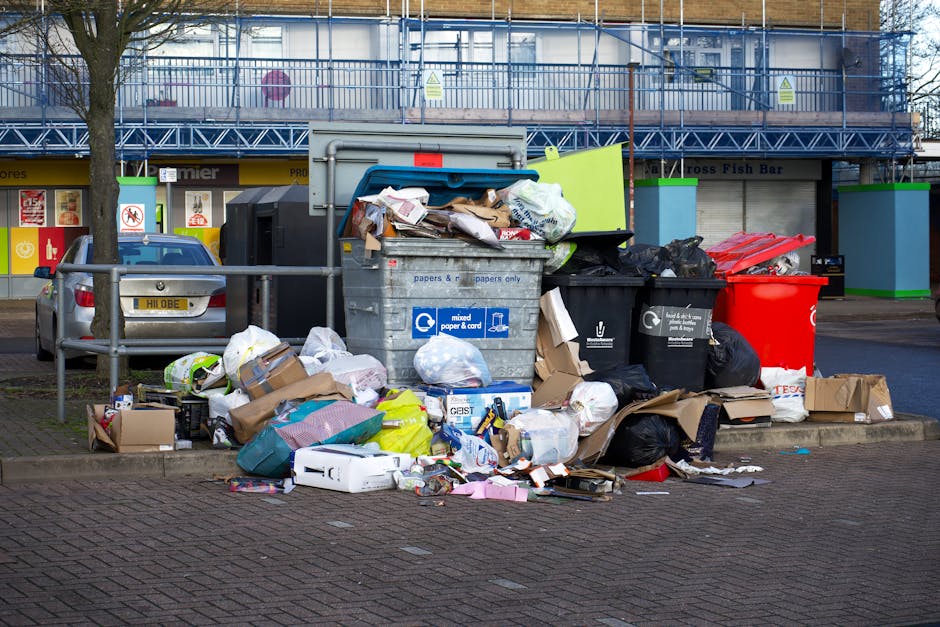
Avoid hidden fees in Battersea rubbish removal quotes
If you have ever compared rubbish removal quotes and thought, "That seems fine... but what's the catch?", you are not alone. Hidden charges can turn a simple clearance job into an awkward, expensive mess, especially when access is tight, items are bulky, or the quote was never properly explained in the first place. This guide on how to Avoid hidden fees in Battersea rubbish removal quotes will show you what to ask, what to check, and how to spot the warning signs before anyone turns up at the kerb with a surprise add-on.
Battersea has its own practical quirks too: narrow streets, flats above shops, controlled parking, basement access, and the usual London problem of nowhere convenient to stash a pile of waste. So, yes, pricing should reflect the job. But it should also be transparent. Let's make it simple, useful, and a bit less stressful.
Table of Contents
- Why hidden fees matter in Battersea rubbish removal
- How rubbish removal quotes are usually built
- Benefits of understanding the pricing properly
- Who should pay extra attention
- A step-by-step way to check a quote
- Expert tips to keep costs clear
- Common mistakes that lead to surprise fees
- Tools, resources and useful pages
- Law, compliance and best practice
- Quote options and how they compare
- A real-world Battersea example
- Practical checklist
- Conclusion
- Frequently asked questions
Why Avoid hidden fees in Battersea rubbish removal quotes Matters
Hidden fees are not just annoying. They change the whole buying decision. A quote that looks competitive at first glance may become poor value once call-out fees, access charges, labour extras, or disposal uplifts are added later. In a busy area like Battersea, that can happen more easily than people expect.
Think about the usual local scenarios. A flat on the third floor with no lift. A garden clearance where waste has to be carried through a side passage. A builder's bag that turned into several bags because the project ran longer than planned. Those are normal complications, not scandals. The problem is when they are not mentioned upfront.
To be fair, a little price variation is normal. The job might genuinely be bigger than it first looked. But the quote should explain why. If a company is clear from the start, you can decide whether the extra cost is worth it. If they are vague, you are basically agreeing to a moving target. And nobody likes that.
It also matters because rubbish removal is one of those services where people are already under pressure. You might be moving out, clearing a property after a difficult time, or dealing with piles of waste that are starting to feel a bit overwhelming. The last thing you need is a bill that makes you feel cornered.
Practical truth: a good rubbish removal quote should help you compare like-for-like. If it doesn't clearly say what is included, you are not comparing prices at all - you are comparing assumptions.
How Avoid hidden fees in Battersea rubbish removal quotes Works
A transparent quote is usually built from a few simple parts: the amount of waste, the type of waste, the labour needed, access conditions, disposal charges, and sometimes timing or location-based factors. The trick is that each part should be visible before you agree to anything.
Most reputable waste clearance pricing works in one of two ways. Either you are given an estimated cost based on photos, descriptions, or a short call, or the company visits in person to assess the load. Both can work. The key is whether the company explains what could change the price.
Here is where hidden fees often creep in:
- Weight or volume changes if the load is larger than described.
- Access charges if waste has to be carried a long distance or from upper floors.
- Special item fees for items like fridges, mattresses, sofas, or certain appliances.
- Labour extensions if the job takes longer than expected.
- Parking or congestion-related costs where the team needs to pay for vehicle access.
- Waste type uplifts for mixed, bulky, or harder-to-handle materials.
That does not automatically mean the company is doing anything wrong. It only becomes a problem when the customer is not told clearly. If the quote says "all-inclusive" but later grows by three extra line items, that is where trust goes out of the window.
You will notice that the best quotes tend to read a bit plainly. They are not flashy. They are specific. They name what is included and what might change. Honestly, that boring clarity is a good sign.
Key Benefits and Practical Advantages
Learning how to spot hidden fees is not just about saving money, although that is a big part of it. It also makes the whole process calmer and easier to manage.
1. You can compare quotes fairly
A clear quote lets you compare providers on the same basis. Without that, one company may look cheaper simply because they left out disposal or labour charges. Once those get added, the "bargain" is suddenly not a bargain at all.
2. You reduce the risk of a difficult handover
Few things are more uncomfortable than a team arriving on site and changing the price at the last minute. If you have already cleared your day, moved furniture, or told a landlord you are ready, that awkward moment is not ideal. Clear quoting reduces that risk.
3. You can prepare the job properly
Once you know what might affect the price, you can make small choices that help. For example, you may move items closer to the entrance, group waste types together, or send better photos in advance. Little changes, but they matter.
4. You are less likely to overpay for avoidable extras
Sometimes a fee is genuine. Sometimes it could have been avoided with better planning. Knowing the difference helps you avoid paying for things that should have been included, or that you could reasonably handle yourself.
5. You get a more professional service overall
In our experience, companies that are tidy with quotes are often tidier with everything else too: communication, arrival windows, loading, and cleanup. Not always, of course, but often enough that it is worth paying attention.
Key takeaway: transparency is not just about price. It is about control, confidence, and fewer surprises on the day.
Who This Is For and When It Makes Sense
This matters for anyone booking rubbish removal in Battersea, but a few people should be especially careful.
- Flat residents dealing with stairs, lifts, shared entrances, or tight hallways.
- Homeowners clearing lofts, garages, gardens, or post-renovation waste.
- Landlords and letting agents who need quick turnaround and predictable costs.
- Office managers arranging clearances where access, security, and timing matter.
- People handling an estate, move, or major declutter where the exact volume is difficult to judge at first.
It also makes sense whenever the job includes mixed waste. A few furniture items, some old appliances, cardboard, a mattress, and a stack of random bits from the shed can change the pricing picture quite a bit. One item by itself? Usually straightforward. A pile of "miscellaneous things" in the corner of a room? Much less so.
If you are wondering whether you need to worry this much, the honest answer is: only if you want to avoid surprises. Which, let's face it, most people do.
Step-by-Step Guidance
If you want to avoid hidden fees properly, use this process every time you request a quote. It is simple, but it works.
Step 1: Describe the waste as precisely as you can
Do not just say "a few bits and pieces." List the items, the rough quantity, and whether they are heavy, awkward, or awkwardly placed. If there are appliances, mention them. If there are building materials, say so. A photo usually helps too - and yes, good light matters. A gloomy hallway photo at 7pm is not the same as a clear daytime picture.
Step 2: Explain access honestly
Tell the company if there are stairs, no lift, permit parking issues, narrow entrances, or a long carry distance from the property to the vehicle. That is where pricing often shifts. If they know about access upfront, they can quote more accurately. If they do not, they may need to adjust later.
Step 3: Ask what is included in the price
Make them spell it out. Does the quote include labour, loading, disposal, parking time, and VAT if applicable? Are there item-specific charges? Is there a minimum load fee? Ask plainly. A reputable provider should not mind.
Step 4: Ask what could change the price
This is the question many people skip, and it is the one that often saves money. Ask, "Under what circumstances would the quote increase?" That one line can reveal whether the company is transparent or just optimistic.
Step 5: Confirm the charge structure before booking
Find out whether the price is fixed, estimated, or variable. A fixed price is easiest to understand. An estimate can still be fine, but you need to know the conditions. If you are comparing two quotes, make sure both are structured the same way. Otherwise it is apples and pears.
Step 6: Keep the written confirmation
Save the email, message, or booking note that sets out the price and inclusions. If something later changes, you will have a record of what was originally agreed. Simple, but important.
Step 7: Reconfirm before collection day
If anything about the load has changed, say so before the team arrives. Added items, extra bags, or blocked access can all alter the job. Let them know early and the conversation stays calm. Nobody enjoys a standoff on the pavement.
Expert Tips for Better Results
Here are the small, practical details that make the biggest difference.
- Use photos from more than one angle. One tidy-looking picture can hide half the load.
- Include scale references. A photo next to a door, chair, or bin can help the estimator judge size more accurately.
- Separate valuable reuse items from waste. If something could be donated, resold, or kept, remove it before the clearance estimate.
- Be honest about heavy items. Old wardrobes, damp carpets, broken appliances, and garden rubble are not the same as light household clutter.
- Check whether the company explains disposal pathways. Clear operators usually have a process for sorting, recycling, and safe handling.
- Ask for clarity on minimum charges. A small job can still trigger a minimum load price, and that should be visible from the start.
One practical habit I like is asking for the quote in writing after a short call. It sounds obvious, but in the rush of a busy day people often rely on memory, and memory is a slippery thing. By 5pm, that "all-inclusive" detail can mysteriously vanish from both sides.
Another good move: if a quote seems unusually low, ask why. Sometimes it is a genuine special offer. Sometimes the missing bit is buried where you cannot see it yet.
Common Mistakes to Avoid
These are the mistakes that most often lead to surprise costs, and they are easy to make when you are trying to get the job done quickly.
Going by the headline price only
A low headline figure can be tempting. But if it excludes labour, disposal, VAT, or access-related charges, it is not really a full quote. It is just a teaser.
Under-describing the job
If you leave out a sofa, a fridge, or three extra bin bags, the company may need to adjust the price on arrival. Better to over-explain than under-explain.
Ignoring access issues
In Battersea, access matters. More than people think. Basement flats, shared stairwells, and permit-only streets all affect how straightforward the collection will be.
Assuming all waste is priced the same
Household clutter, garden waste, appliances, builder's rubble, and confidential paperwork can each carry different handling costs. A one-size-fits-all assumption is a fast route to surprise billing.
Not asking about disposal and recycling charges
Some companies bundle everything together neatly; others separate out landfill, recycling, and special handling. If the breakdown is unclear, ask.
Booking without checking the small print
Yes, nobody loves reading terms and conditions. But the little notes often contain the exact detail that explains a later charge. A five-minute read can save a lot of irritation.
Truth be told, most bad pricing experiences come from one thing: vagueness. Not always dishonesty. Just vagueness. And that is enough to cause trouble.
Tools, Resources and Recommendations
You do not need special software to avoid hidden fees, just a sensible system. These practical tools help:
- Photos from your phone to document the waste clearly.
- Measurements of large items such as wardrobes, mattresses, white goods, or builders' waste bags.
- Notes on access including stairs, parking, lift availability, and any time restrictions.
- A simple comparison table so you can compare two or three quotes side by side.
- Written confirmation of what was agreed before collection.
If you want a broader service overview before booking, the pricing and quotes page is a useful place to understand how clear pricing should be presented. For broader service options, you can also review the waste removal service and related clearance pages such as house clearance or flat clearance depending on the type of job.
For bulky items, it also helps to know whether the provider handles specific categories such as mattress and sofa disposal or fridge and appliance removal. These are the kinds of items that often trigger extra charges if they are not declared properly.
If your job is more involved, like mixed clearance or awkward access, services such as builders waste clearance, garden clearance, or loft clearance may be more relevant. Different jobs, different pricing logic. That bit is easy to miss.
And if you want to know more about how the business presents itself, the about us page can help with trust signals, while contact us is there if you need to ask something specific before you commit.
Law, Compliance, Standards, or Best Practice
Rubbish removal is not just a pricing issue. It also touches safety, responsible handling, and environmental duties. In the UK, waste must be handled appropriately, and any company collecting it should operate with proper care and the right paperwork where required. You do not need to become a compliance expert, but it does help to know the basics.
A few best-practice points are worth keeping in mind:
- Waste should be collected and transported responsibly. That includes sorting, loading, and disposal practices that are appropriate to the material.
- Hazardous items need special handling. Do not assume they can go with general household waste. If in doubt, ask first.
- Insurance and safety matter. A professional operator should be able to explain how they manage risk on site.
- Data-bearing items need attention too. Old paperwork, devices, or confidential material may need separate consideration.
If you are clearing an office or business site, this becomes even more important. Clear pricing should still be paired with proper handling, and that is where a service such as business waste removal or office clearance can make the process smoother.
For more sensitive materials, there is also confidential shredding. Not every job needs it, of course, but when it does, it is better to ask early than try to retrofit a fix later.
Finally, if safety, insurance, or duty of care is a concern, it is sensible to review the company's insurance and safety information and health and safety policy. That may sound a bit formal, but it matters - especially in homes with narrow staircases, shared entrances, or fragile surfaces.
Options, Methods, or Comparison Table
Not every rubbish removal quote works the same way. Here is a practical comparison of the most common approaches.
| Quote method | How it works | Main advantage | Watch out for |
|---|---|---|---|
| Fixed quote | The price is agreed in advance based on the details provided. | Clear and easy to compare. | Only reliable if the information you gave was accurate. |
| Estimate | A likely price is given, but it may change if the job differs from the description. | Useful when the job is hard to judge remotely. | Ask exactly what could change the final amount. |
| On-site assessment | The provider inspects the waste before confirming the final price. | Often the most accurate. | May take longer to arrange and may still need written confirmation. |
If you are trying to keep things simple, a fixed quote is usually the easiest to manage. But an estimate can be fine too, as long as the rules are stated clearly. The problem is not the format. The problem is surprise.
Simple rule: if two quotes look similar but one explains more, the clearer one is often the safer bet. The cheaper one can be the dearer one by the time the dust settles. Bit of a nuisance, that.
Case Study or Real-World Example
A Battersea resident clearing a two-bedroom flat might call for a quote after piling up furniture, broken shelving, a mattress, a few bags of general rubbish, and some old kitchen bits. On the phone, the job sounds small enough. But when the provider asks for photos, it becomes obvious that the waste is spread across two rooms and needs carrying down a shared staircase.
With a clear conversation upfront, the quote can be adjusted before the booking is confirmed. The customer knows the likely price range, understands what is included, and can decide whether to sort a few items themselves first. No drama. No awkward change on the day. Just a more realistic plan.
Now compare that with the common "we'll see when we get there" approach. The crew arrives, notices the extra access issue, and the customer is suddenly being told the price is higher because the load took longer to move. Maybe that adjustment is justified. Maybe it is not. But either way, trust has already taken a hit.
That is why the best outcome is rarely the cheapest quote on paper. It is the quote that matches reality from the start.
Practical Checklist
Use this checklist before you accept any rubbish removal quote in Battersea.
- Have I described every item clearly?
- Have I sent photos from more than one angle?
- Have I explained stairs, lifts, parking, and access limits?
- Have I asked whether labour is included?
- Have I asked whether disposal fees are included?
- Have I checked for item-specific charges?
- Have I asked what could make the price change?
- Have I received the quote in writing?
- Do I understand whether it is fixed or estimated?
- Have I checked the provider's safety, insurance, and policy information?
If you can answer yes to most of those, you are in a much stronger position. Not perfect, maybe, but much stronger.
Conclusion
The easiest way to avoid hidden fees in Battersea rubbish removal quotes is to slow the process down just enough to ask the right questions. That one small habit changes everything. It helps you compare properly, plan realistically, and keep control of the final cost.
Be specific about what needs removing. Be honest about access. Ask what is included. Get it in writing. And if a quote feels vague, treat that as useful information rather than a nuisance. Transparency is usually worth more than a tiny saving that disappears later.
When you get the pricing right, the rest of the job feels lighter. Less uncertainty. Less chasing. Less that sinking feeling when the bill arrives. And in a busy place like Battersea, that calm is worth having.
Get a free quote today and see how much you can save.
If you want to go a step further, you can also review practical service details on the book online page or explore the company's recycling and sustainability approach before you book. A little checking now tends to pay off later. Quite a lot, sometimes.
Frequently Asked Questions
How do I know if a rubbish removal quote has hidden fees?
If the quote is vague, missing labour or disposal details, or does not explain what could change the price, there is a good chance there are hidden fees or at least unclear terms. Ask for the full breakdown in writing.
What should be included in a Battersea rubbish removal quote?
A proper quote should explain the waste type, estimated volume, labour, loading, disposal, and any likely extras such as access issues or special item handling. The more specific it is, the easier it is to trust.
Are all rubbish removal prices based on volume?
Not always. Many jobs are priced by volume, but access, weight, item type, and disposal requirements can all affect the final cost. That is why two loads that look similar can be priced differently.
Why do flats in Battersea sometimes cost more to clear?
Flats can involve stairs, lifts, controlled entrances, long carries, or parking difficulties. None of that is unusual, but it does add labour and time, which may affect the quote.
Should I send photos before getting a quote?
Yes, definitely. Photos help the provider judge the amount of waste and any access issues more accurately. A few clear images can prevent a lot of back-and-forth later.
Is a fixed quote better than an estimate?
Usually yes, because it is easier to understand and compare. That said, an estimate can still be fine if the conditions for any price change are clearly explained in advance.
Can hidden fees be legitimate?
Sometimes an extra charge is legitimate if the job turns out to be bigger, heavier, or more difficult than described. The issue is not every extra fee; it is when those fees were not made clear beforehand.
What questions should I ask before booking rubbish removal?
Ask what is included, what could change the price, whether labour and disposal are covered, whether there are minimum charges, and whether special items carry extra costs. Simple questions, but very effective.
Do special items like fridges or mattresses usually cost more?
They can, yes. Certain items often require separate handling or disposal, so it is wise to mention them upfront rather than leaving them for the crew to discover on the day.
How can I avoid paying for wasted time on collection day?
Prepare the waste in one place if possible, ensure access is clear, and tell the company about any obstacles before arrival. The smoother the handover, the less chance there is for avoidable extra time charges.
Is it worth checking insurance and safety information?
Yes. It gives you confidence that the provider is operating responsibly, especially for larger jobs or properties with narrow stairs, shared entrances, or delicate fixtures.
What if the final price is higher than the quote?
Ask for a clear explanation and compare it with what you originally agreed. If the increase was not communicated properly, you are justified in questioning it. If it was due to a change in the job, at least you know why.
Where can I find more details before I book?
Useful starting points include the pricing and quotes page, service pages such as house clearance and office clearance, and the company's complaints procedure if you ever need to understand how issues are handled. Knowing the process upfront is reassuring, even if you never need it.