Recycling and Sustainability — Business Waste Removal Battersea
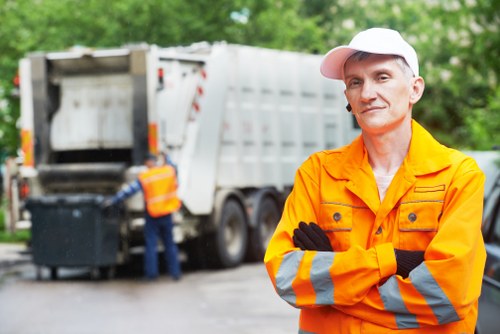
Business Waste Removal Battersea is built around an eco-first approach to managing commercial refuse across Battersea and the wider Wandsworth borough. Our introduction explains how a sustainable rubbish area can function in an urban commercial context, reducing environmental impact while keeping operations practical for shops, offices and small manufacturers. We focus on scalable, measurable improvements to help businesses transition from simple collection to true circular-economy activity.Our commercial waste removal in Battersea encourages separation at source, sorting and careful handling to ensure materials enter the correct recycling streams. The borough's long-standing approach to waste separation, which supports separate streams for glass, paper, cardboard, food waste and general refuse, informs how we design skip layouts, on-site sorting guidance and route plans. By aligning with local practices we reduce contamination rates and increase the value of recovered materials, bolstering the wider eco-friendly waste disposal area across the community.
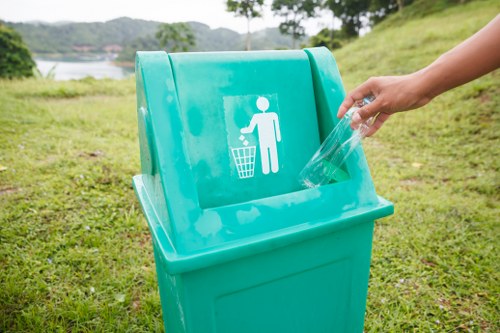 A central pillar of our policy is a clear, time-bound recycling percentage target. For business waste removal in Battersea we aim for a 60% diversion rate from landfill across our commercial contracts within 24 months of onboarding, increasing progressively to 75% by 2030 through continuous improvement. These figures are backed by monthly reporting, waste audits and targeted interventions for high-volume clients, and they form part of our commitment to measurable sustainability in the sustainable rubbish area.
Local transfer stations are essential to efficient and low-impact material recovery. We consolidate loads for transport to licensed transfer stations serving Battersea and the surrounding boroughs, prioritising facilities that operate high-standard material recovery processes. Where possible we route baled paper and cardboard directly to local reprocessors, while organics go to AD (anaerobic digestion) facilities that turn food waste into energy and soil conditioners. By minimising double-handling and using nearby transfer hubs we lower emissions and speed up turnaround for our clients.
 Partnerships with charities are a practical way to keep usable goods out of the waste stream. We coordinate carefully with local not-for-profits and social enterprises to divert furniture, working electronics and reusable fixtures. Examples of typical arrangements include:
- Direct donation routes for office furniture and meeting-room equipment to local community centres and charity shops
- Refurbishment pipelines for IT equipment handled by social enterprises that provide training and discounted devices to low-income residents
- Collaboration with local reuse networks for textiles and household items collected during commercial clearances
These partnerships reduce disposal volumes, support community needs and provide social value as well as environmental benefit. Our teams carry out basic pre-collection checks so that only appropriate, reusable items are offered to charity partners, minimising wasted logistics and ensuring a smooth transfer into the reuse chain.
Low-carbon vans, fleet efficiency and carbon-aware routing
Our fleet strategy is central to delivering low-impact business waste removal services in Battersea. We operate a growing number of low-carbon vans — including plug-in electric vehicles and efficient hybrid models — supplemented by cargo bikes for central, high-density collections where feasible. Route optimisation software reduces mileage, idling time and urban congestion, decreasing the carbon footprint associated with each collection while improving reliability and punctuality for clients.We also provide training for client staff on segregation and on-site minimisation to increase recycling rates. Clear labelling, colour-coded bins and periodic refresher sessions help staff separate glass, metal, mixed recyclables, compostables and general refuse correctly. When businesses separate effectively at source the contamination rate drops, recycling yields rise and the whole sustainable rubbish area becomes more efficient and cost-effective.
 Our measurement and reporting framework underpins continuous improvement. Commercial clients receive monthly diversion reports showing tonnages by stream, contamination percentages, carbon saved and progress toward the recycling percentage target. We also carry out annual material audits for larger accounts to identify opportunities for further separation and reuse, and to adjust collection frequency and container types to match changing waste profiles.
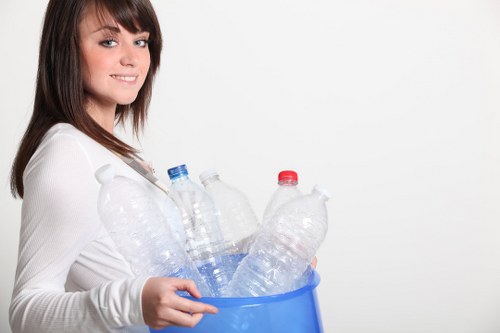
Practical recycling activity in Battersea and future commitments
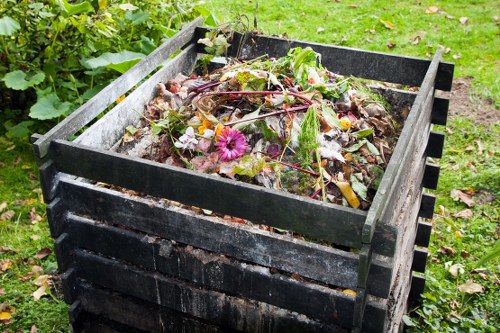
In practice this means tailored solutions for each business: dedicated glass collections for restaurants, secure confidential-shredding chains for professional services, and scheduled bulky-item pickups for retail premises. We respect the borough's separation guidance — promoting separate food-waste streams for hospitality clients and small commercial composting where feasible. Key features of our approach include:- Custom containerisation to support source segregation and minimise cross-contamination
- Transparent reporting to show progress toward recycling and carbon-reduction targets
- Partnerships with charities and reuse organisations to maximize the value of reusable items
Our roadmap for the next five years includes continuous expansion of the low-carbon fleet, higher local recovery rates through strategic use of transfer stations, and deeper partnerships with community organisations to embed reuse in the local circular economy. We see Business Waste Removal Battersea as a collaborative endeavour: reducing landfill, enabling reuse and creating a cleaner, greener urban environment that benefits both commerce and community.
